
Our 2025–2026 Annual Report: from planning to action for amphibians
Wild-born rocket frogs in Panama, a national KBA assessment funded, and an alliance now 92 partners strong. Read the year in full.
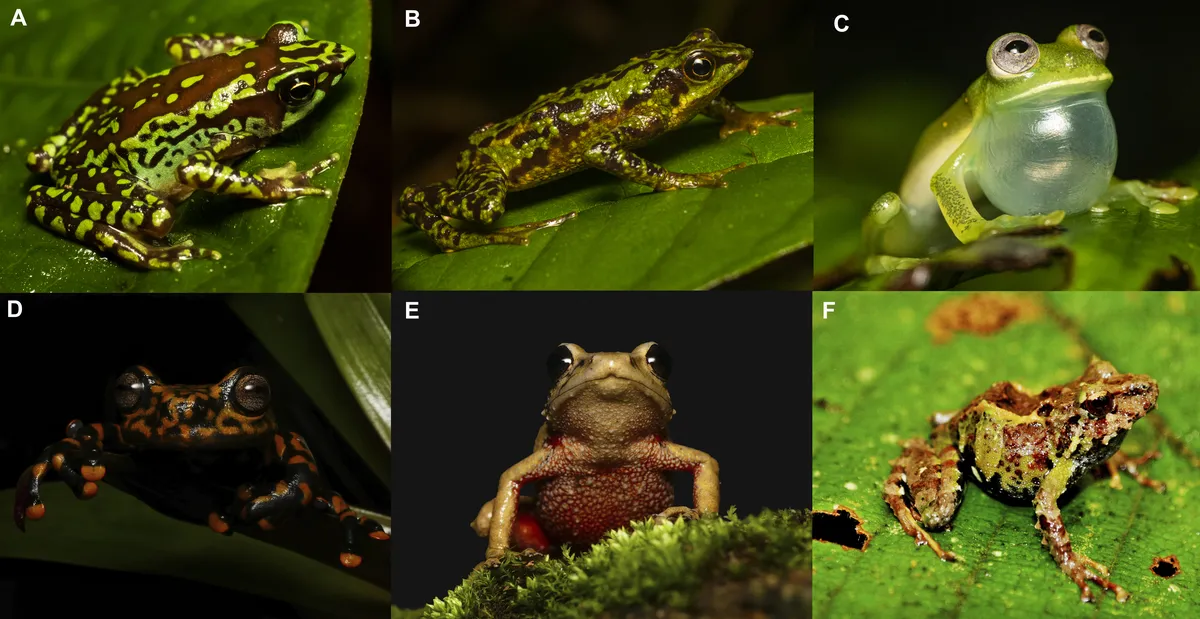
A coalition of Ecuadorian conservation organizations has released Arlequines del Pastaza (Harlequins of the Pastaza), a new conservation bulletin highlighting the critically endangered harlequin frogs of the eastern Andes. The bulletin is a collaboration between Fundación EcoMinga, Fundación Oscar Efrén Reyes, Finca Argentina, Centro Jambatu de Investigación y Conservación de Anfibios, Museo de Zoología of the Universidad San Francisco de Quito, Instituto de Biodiversidad Tropical, INABIO, Ninfa Amazónica, YanaCocha, and students from the Universidad Estatal Amazónica — with the support of the Amphibian Survival Alliance and Re:wild.
Harlequin frogs (genus Atelopus, family Bufonidae) are among the most critically endangered groups of amphibians in the world. Characterized by their triangular heads, long toes, interdigital membranes, and tadpoles with abdominal suckers, they depend on flowing, clean water and well-preserved natural vegetation for reproduction.
The bulletin includes three photo essays on different Atelopus species, preliminary results from the third annual Pastaza Frog and Snake Festival, and an original comic about the little-known lives of two harlequin frog species. It is designed as a tool grounded in scientific knowledge for wide distribution, intended to inspire both younger generations and adults about the importance of protecting these animals.
Ecuador is one of the countries with the greatest diversity of amphibians on the planet. Many of its species are unique, found only in specific mountains or watersheds. Deforestation, the expansion of the agricultural frontier, and mining and hydroelectric activities have pushed numerous species to the brink of extinction.
The reserves protected by this network of partners in the Pastaza watershed provide critical habitat for multiple Atelopus species, including Atelopus palmatus, classified as Critically Endangered by the IUCN.
Read the full feature article on EcoMinga's conservation work in the Ecuadorian Andes in AmphiBios Issue 1, the Amphibian Survival Alliance's quarterly magazine for the global conservation community.
Download the complete Arlequines del Pastaza bulletin (PDF) — the bulletin is in Spanish and will be released in print on April 22, 2026 in the Pastaza region of Ecuador.
Wild-born rocket frogs in Panama, a national KBA assessment funded, and an alliance now 92 partners strong. Read the year in full.

AmphiBios Issue 3 follows amphibians through restored wetlands, classrooms, working landscapes, laboratories, and art spaces, bringing practical conservation, research, and community experience together in a web-first issue built to be found, shared, and used.

Two issues in, AmphiBios has reached over 10,100 readers and 85 contributors across all seven realms. Here is what the community built, and how to be part of Issue 3.