
Our 2025–2026 Annual Report: from planning to action for amphibians
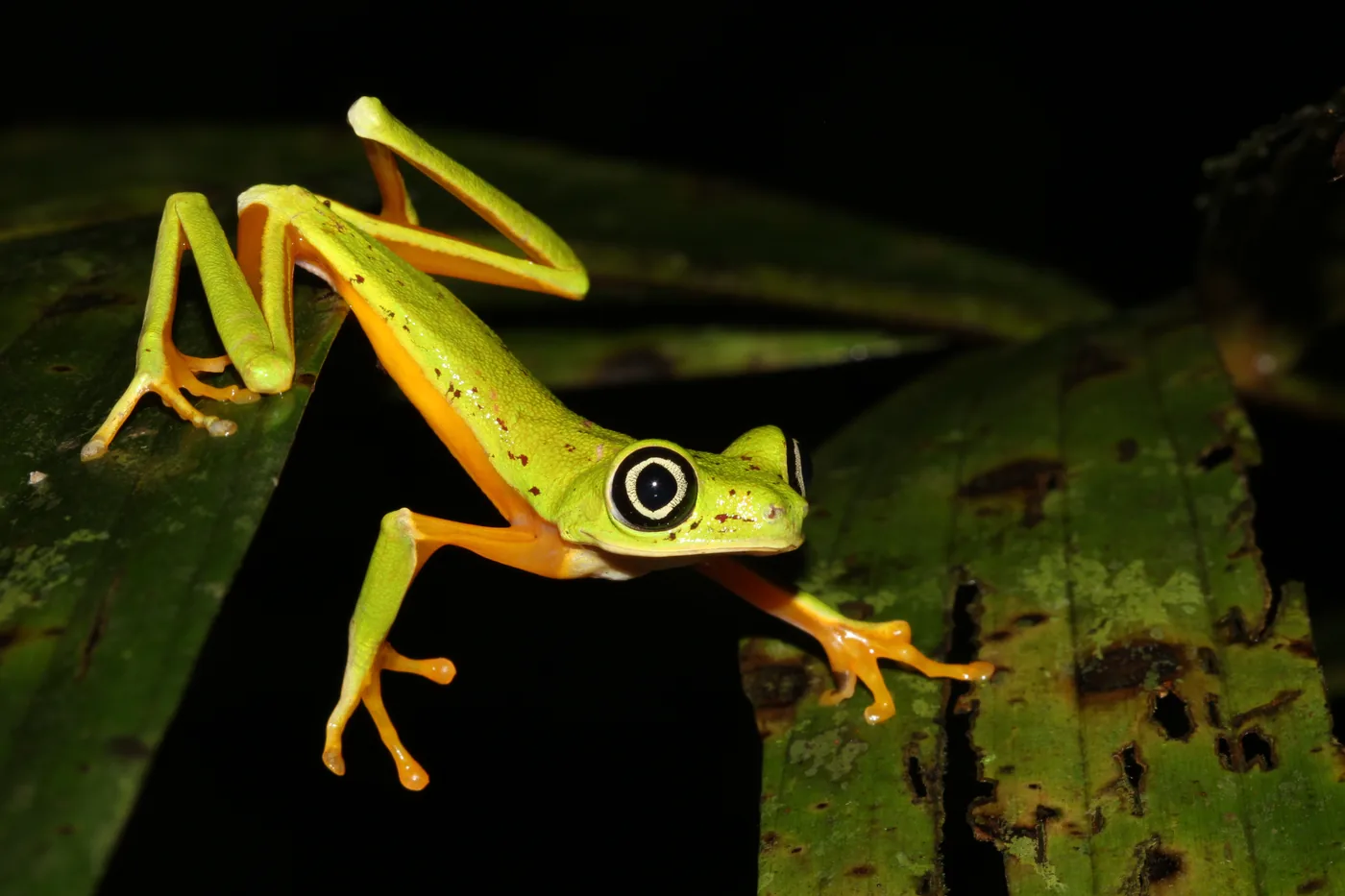
Wild-born rocket frogs in Panama, a national KBA assessment funded, and an alliance now 92 partners strong. Read the year in full.

The Amphibian Survival Alliance is proud to share Issue 3 of AmphiBios, our digital magazine built around the people doing amphibian conservation.
Amphibians are not especially interested in our categories. We draw lines between forest and farm, city and wilderness, research and action. The frogs, predictably, did not read the land-use plan.
Issue 3 explores what happens beyond those neat boundaries. Its contributors follow amphibians through restored wetlands, classrooms, working landscapes, laboratories, art spaces, and communities responding to change. Together, their stories show that conservation depends not only on where amphibians live, but on the relationships people build around them.
Recovery in action
Conservation breeding, reintroduction, wetland restoration, disease treatment, and long-term species management show what becomes possible when determined people pair practical action with careful monitoring.
People making conservation part of public life
Educators, artists, volunteers, students, and community organizers bring amphibians into classrooms, public conversations, restoration projects, and creative spaces. Their work reminds us that conservation grows stronger when more people can recognize themselves within it.
Science that changes how we act
Contributors examine disease, skin microbiomes, reproductive ecology, monitoring tools, and overlooked relationships between amphibians and the species around them. The methods vary, but the purpose is shared: notice more, understand better, and act with fewer assumptions.
Living landscapes under pressure
Across wetlands, forests, farms, cities, and streams, these stories consider what happens when amphibians persist in places shaped by people. Their survival offers reasons for hope, but never permission to look away from the pressures those landscapes still face.
Across its stories and research highlights, Issue 3 credits 99 contributors and brings readers into amphibian conservation across at least 30 field, event, and program countries and territories. These figures describe the final published issue; contributor-affiliation reach is tracked separately.
AmphiBios begins on the web because conservation knowledge is most useful when people can find it, share it, and put it to work.
Read together, these stories offer more than inspiration. A successful intervention can become a model. An unexpected result can help another team avoid the same mistake. A locally developed approach can give someone elsewhere a new way to understand a familiar problem.
By bringing field experience, research, community knowledge, and creative engagement into the same searchable space, AmphiBios helps work that might otherwise remain within one project or institution become part of a wider conservation conversation.
Every story has its own permanent page, making it easy to share directly with collaborators, funders, students, and local networks. The magazine is easy to read on mobile, can be saved for offline reading, and can be translated through a browser.
We want AmphiBios to be something the conservation community actively uses: a place to find practical ideas, compare approaches, recognize emerging leaders, share honest lessons, and return to as the collective knowledge grows.
Have a field report, conservation update, research perspective, success story, or hard-earned lesson that others could use?
Submissions for Issue 4 close November 17, 2026, and the issue will be published on December 1, 2026.
AmphiBios exists because the people doing amphibian conservation deserve more than a place to publish. They deserve a platform that helps their knowledge travel, connects their work with what others are learning, and gives useful ideas a life beyond the project or place where they began.
We hope you will read Issue 3, use what is helpful, share the stories that others should see, and add your own experience to the issues still to come.
The frogs still have not read the land-use plan. Fortunately, this community keeps learning how to read the landscape with them.
Wild-born rocket frogs in Panama, a national KBA assessment funded, and an alliance now 92 partners strong. Read the year in full.

Two issues in, AmphiBios has reached over 10,100 readers and 85 contributors across all seven realms. Here is what the community built, and how to be part of Issue 3.
AmphiBios returns with 23 articles and 5 featured studies from the journals, by contributors across 21 countries and six continents. Searchable, shareable, and instantly translatable. Explore Issue 2 now.